- Capacity Range
- 20KG - 175KG
- Power Requirements
- 440V Three Phase AC
- Used in
- FOOD PROCESSING
01 / Overview
Many roasting mills still burn wood, because the fuel is cheap and close at hand. The Firewood Roaster keeps the fire but mechanises the stirring, which is the hardest part of the work to do by hand.
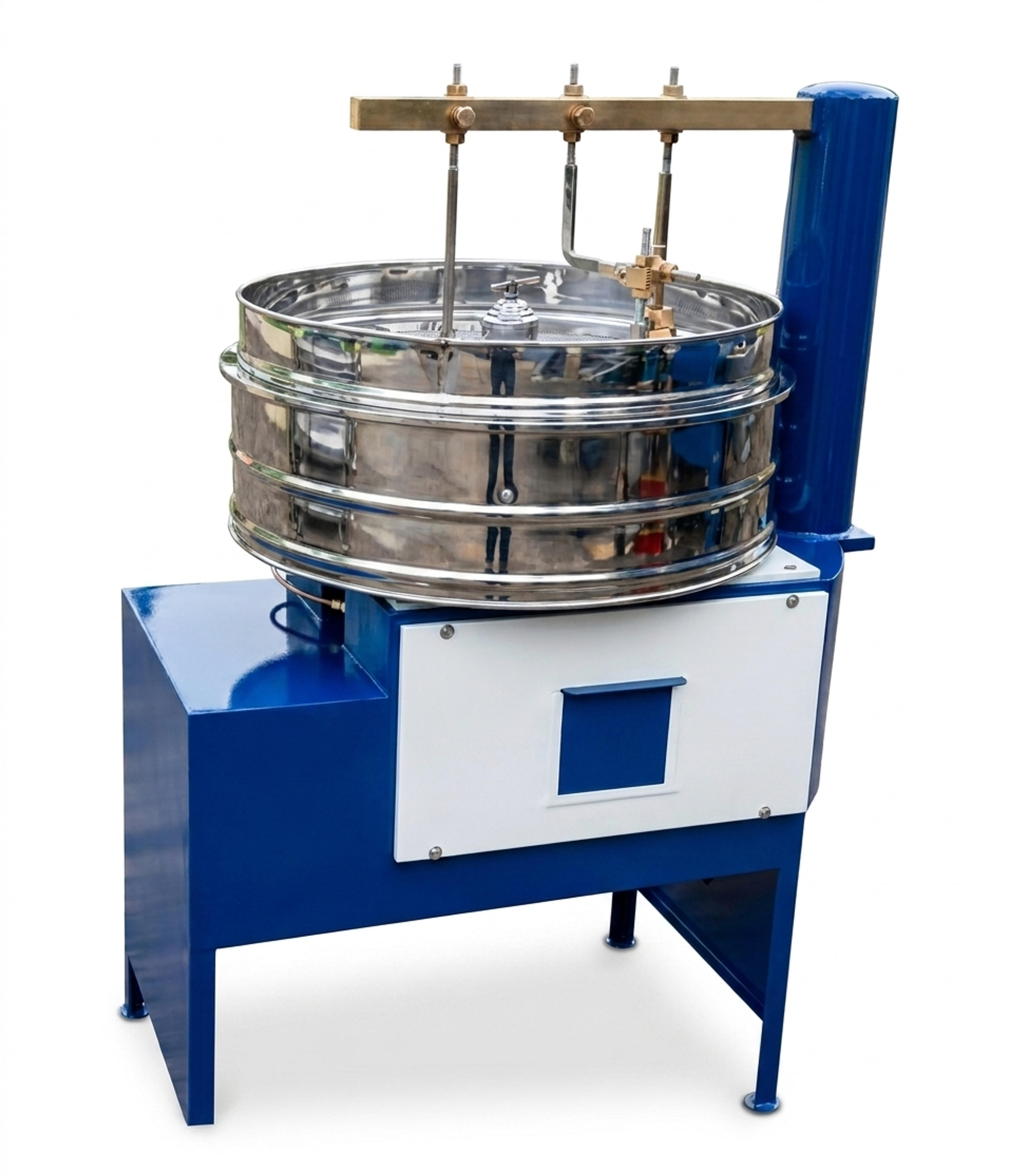
Wood burns in a firebox below a large round pan. A gear motor on a frame above drives the stirrer arms through the batch. A firing door at the side takes the wood, and a flue carries smoke up and away. Only the stirrer needs electric power; the heat comes from the fire.
Rice powder units and roasting mills with cheap firewood, or coconut shell and husk to burn, are the natural buyers. Rural units and brands built on a traditional roast also choose it. Sizes run from 20KG to 175KG, and it sits where any other roaster would, after pulverising and before sifting.
02 / Construction & use
Features
- Firebox below the pan burns firewood, the lowest-cost fuel where wood is plentiful.
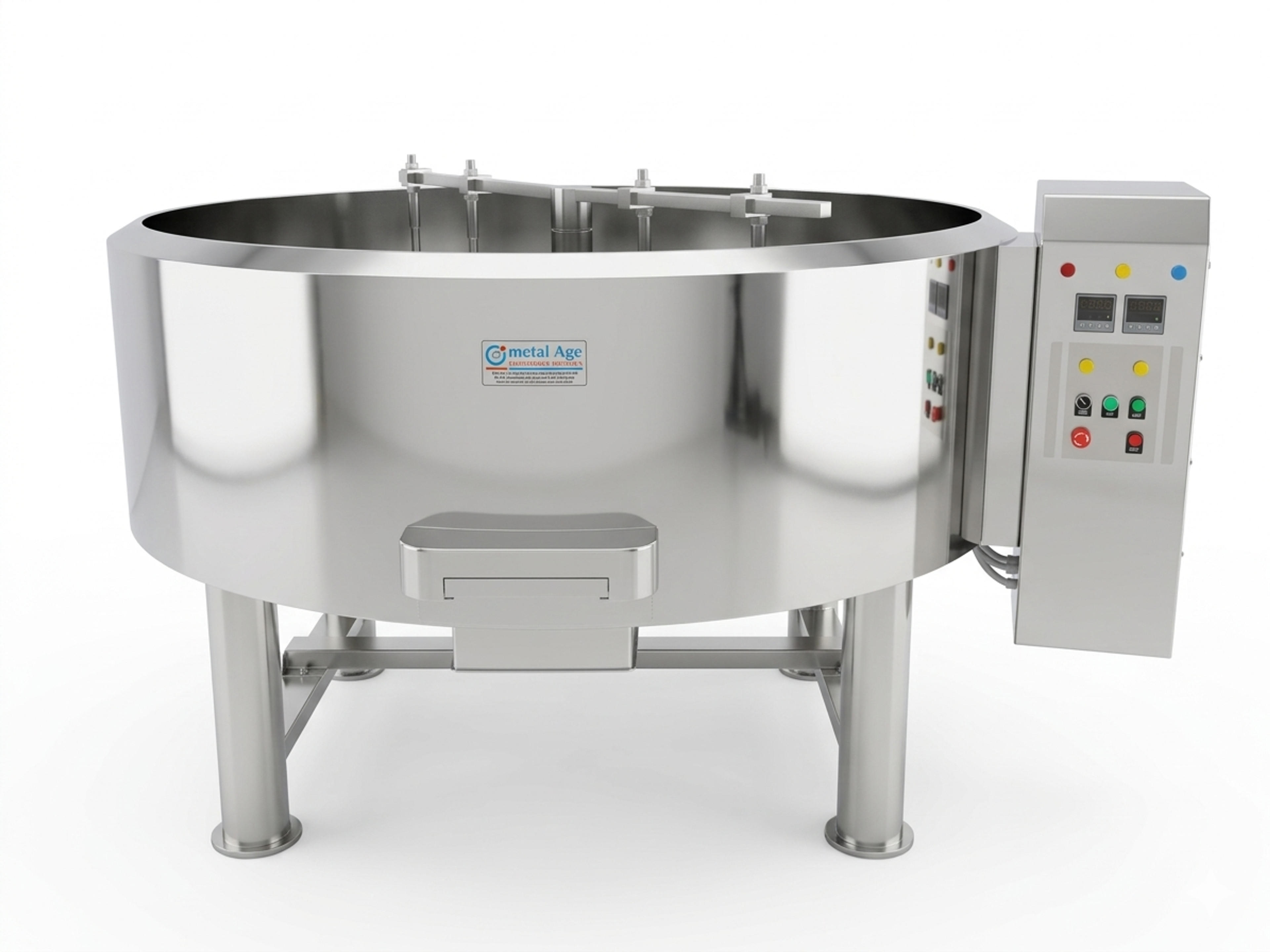
- Large round pan with a stepped metal body keeps the traditional uruli shape.
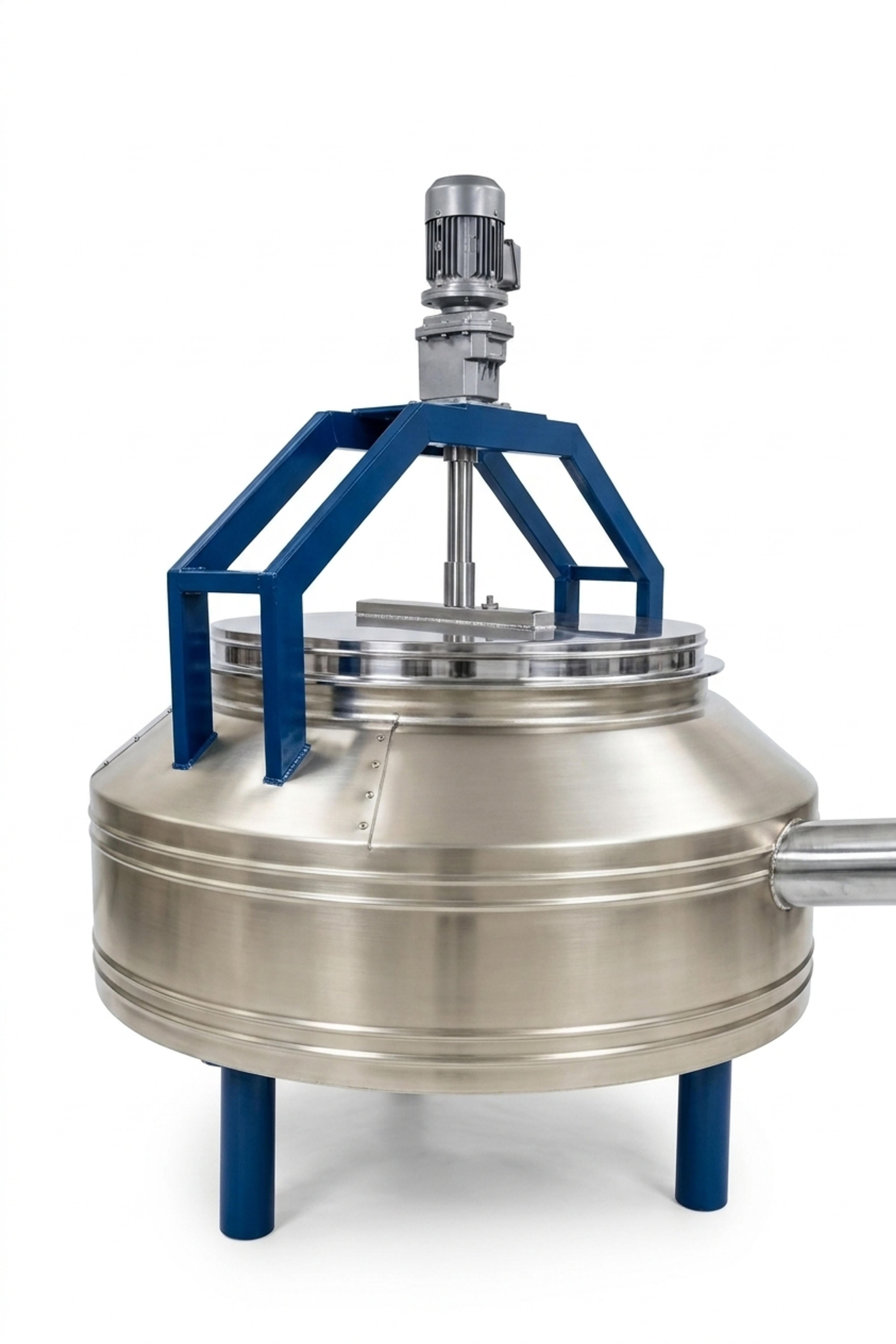
- Gear motor on a frame above drives the stirrer arms through the batch.
- Side firing door takes the wood, and a flue chimney carries smoke away.
- Electric power runs only the stirrer, so no heavy heating load is placed on the supply.
Used to make
- Puttu podi roasted for rice powder units
- Rava and wheat flour roasting
- Coconut roasted for chutney powder
- Spices and masala before grinding
- Grains and pulses for traditional roasted flours
03 / Choosing
- Uruli Roaster (LPG)
The LPG roaster starts quickly, makes no ash and lets the flame be turned down. This one gives up that control for cheap fuel. Pick firewood where wood is plentiful and the roaster can stand in a ventilated shed.
- Electric Roaster
The Electric Roaster needs no fuel store and makes no smoke, but it relies on a heavy three-phase heating load. The Firewood Roaster draws power only for the stirrer, with the heat coming from the fire.
04 / Questions
Why does the Firewood Roaster need an electrical supply?
The electricity runs the stirrer motor. The roasting heat comes from firewood, so the supply is needed only for the stirrer and not for heating, which keeps the electrical load on the site small in daily use.
Can the Firewood Roaster burn coconut shell or husk?
Coconut shell and husk are commonly burned in wood-fired roasters in coconut-growing areas, and they cut fuel cost. Tell us the fuel you plan to use and we will advise on the firebox and flue.
Is the Firewood Roaster better than an LPG roaster for puttu podi?
It has the cheaper fuel where wood is available, but starts slower, gives off more smoke and ash and is harder to control finely. LPG is cleaner and more precise. Choose on fuel cost against cleanliness.
Related