- Capacity Range
- Depends on Material
- Power Requirements
- 440V Three Phase AC
01 / Overview
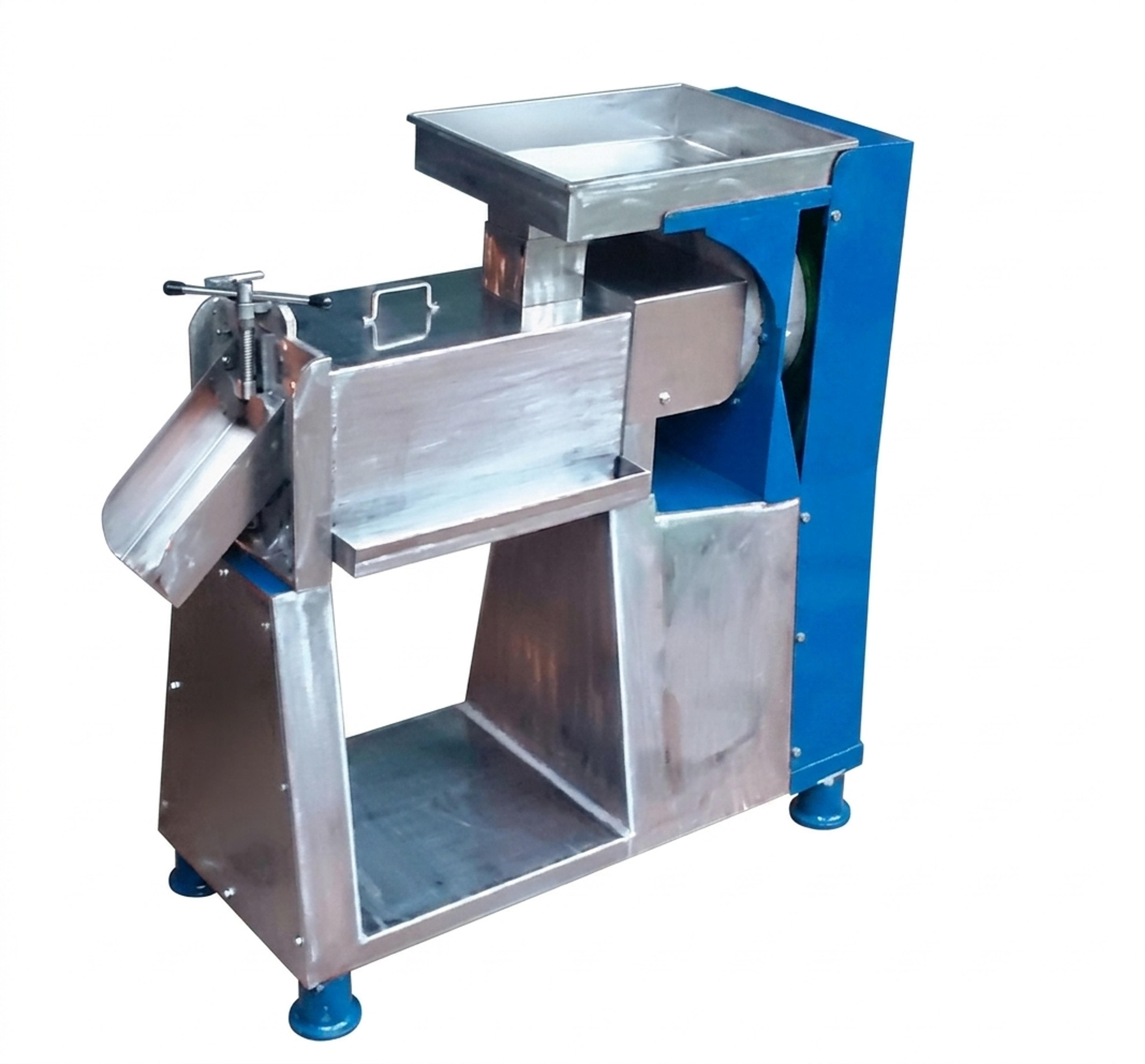
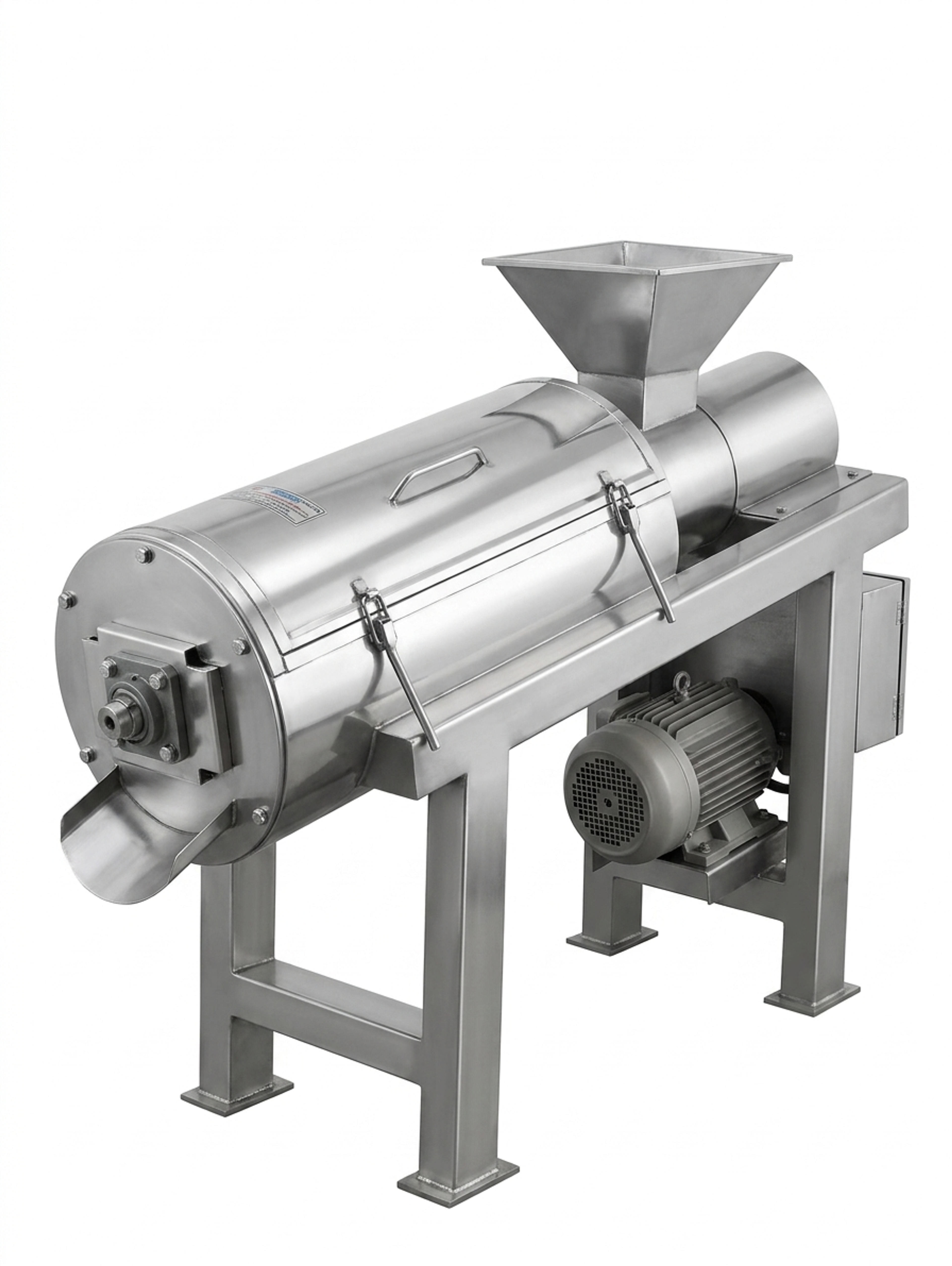
Mango pulp for jam, squash or ready-to-serve drinks has to be free of stones, peel and strings. The Fruit Pulper takes soft fruit in at one end and returns pulp at the other, with the waste pushed out separately.
Fruit drops from a hopper into a cylindrical perforated screen. A rotor with paddles spins inside and presses the fruit against the screen. Pulp passes through the holes, while seeds, skin and fibre are carried to the far end and ejected. The size of the screen holes sets how fine the pulp is and what is held back.
Fruit processors, pickle and jam makers and ayurvedic units use it. Fibrous fruit can be broken up in the Fruit Mill first. The pulp then goes on to a kettle or jacketed vessel for cooking. Capacity depends on the fruit being handled.
02 / Construction & use
Features
- Horizontal cylindrical screen with perforations lets pulp through and holds seeds and skin back.
- Rotor with paddles presses the fruit against the screen as it turns.
- Seeds, skin and fibre leave from a separate discharge, away from the pulp.
- Screen hole size sets the fineness of the pulp and what is rejected.
- Stainless frame with a feed hopper at the inlet end.
Used to make
- Mango pulp for jam, squash and drinks
- Ripe jackfruit pulp with seeds and strands removed
- Guava, papaya and passion fruit pulp
- Tomato and tamarind pulp
- Amla pulp for ayurvedic preparations
03 / Choosing
- Fruit Mill
The Fruit Mill crushes everything into mash and keeps seeds and skin in it, while the pulper separates them out. Use the mill to prepare hard fruit; use the pulper when you need clean pulp.
- Double Screw Juice Expeller
The Double Screw Juice Expeller presses thin juice out of fruit and herbs, leaving the fibre behind. The pulper keeps the body of the fruit as thick pulp. Choose pulp for jam and pickle, juice for drinks.
04 / Questions
Does the Fruit Pulper take ripe jackfruit?
Yes, once the rind is opened and the bulbs are taken out. The paddle rotor presses the flesh through the screen while seeds and strands are carried to the discharge, leaving pulp for jam, halwa or payasam.
Can the Fruit Pulper give a finer or coarser pulp?
Yes. Fineness depends on the screen, and screens can be changed. Tell us whether you are pulping mango, jackfruit or tomato and we will supply screen holes that suit the fruit and the pulp you want.
Where do the seeds and skin go in the Fruit Pulper?
They are pushed along the screen and leave through the discharge end, separately from the pulp. The waste can be collected in its own bin while the pulp runs into a clean container, ready for the kettle.
Related